
Hi,
We’ve been receiving this question quite often, so I decided to write a blog post about it.
Many customers have asked whether CPAT can also be used to analyze migrations to non-Autonomous AI Database targets.
Let’s check what the documentation says about it:
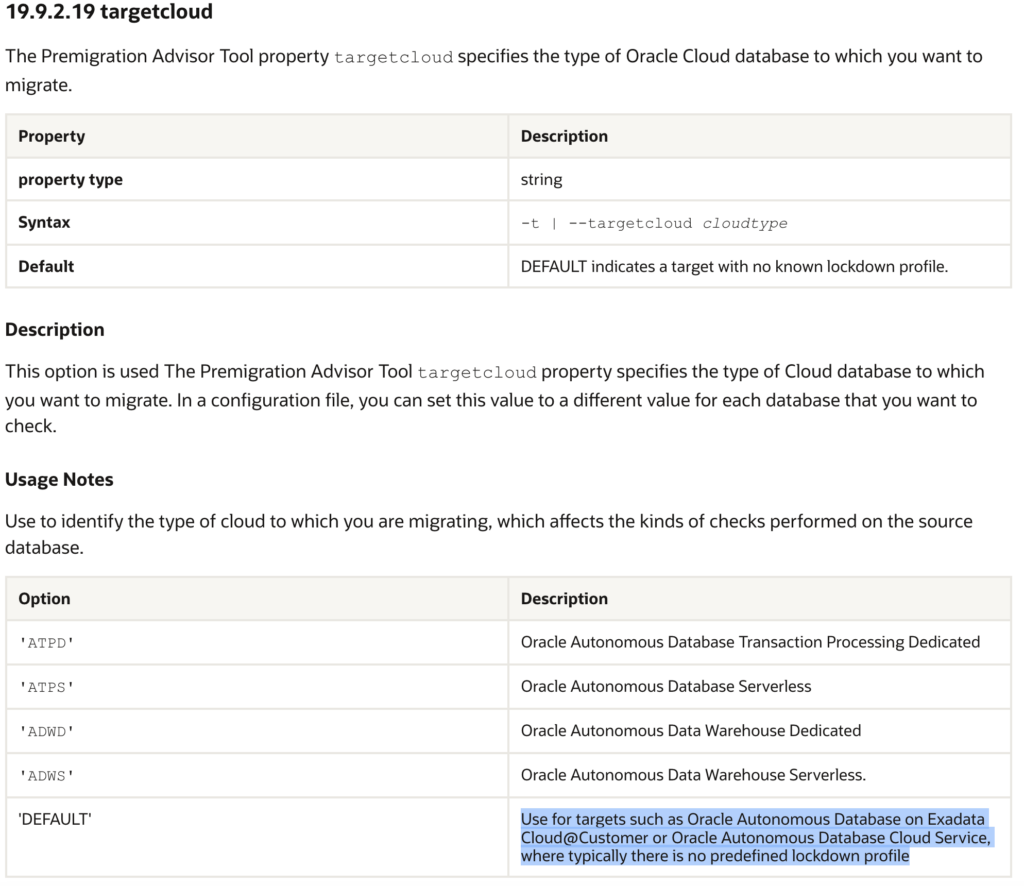
As you can see, when you use --targetcloud DEFAULT, it will do the “magic”.
I’m also asking customers to use --gatherdetails all.
Sample:
./premigration.sh --connectstring jdbc:oracle:thin:@cpat19c:1521/ORCL_gbm_fra.sub09232345080.upgteam.oraclevcn.com --sysdba --username SYS --targetcloud DEFAULT --migrationmethod ALL --reportformat JSON HTML TEXT --zip --full --gatherdetails allImagine you don’t have direct access to the customer’s database and want to avoid sending multiple SQL scripts for them to run and return the results. In this case, CPAT is a great option, as it gathers the necessary information and allows you to analyze and better understand the database environment.
What kind of information can you get?
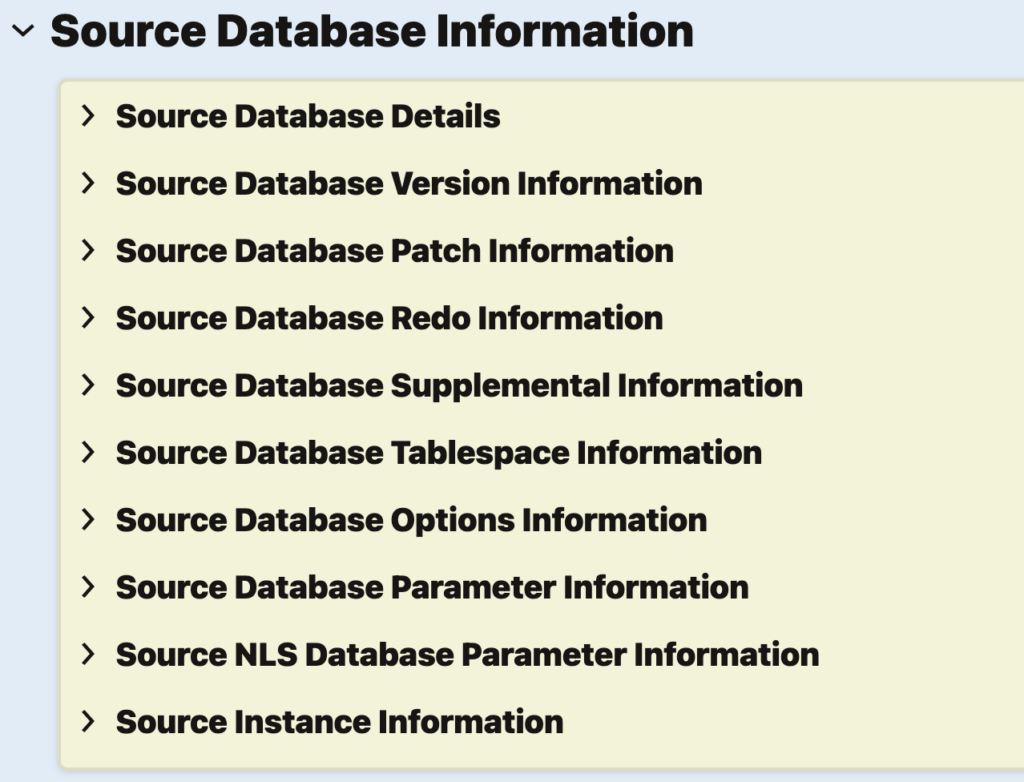
The Source Database Information section gives an overview of the database configuration, including details about the database version, applied patches, redo configuration/amount generated, and other important settings. This information helps you quickly understand the environment where the database is running.
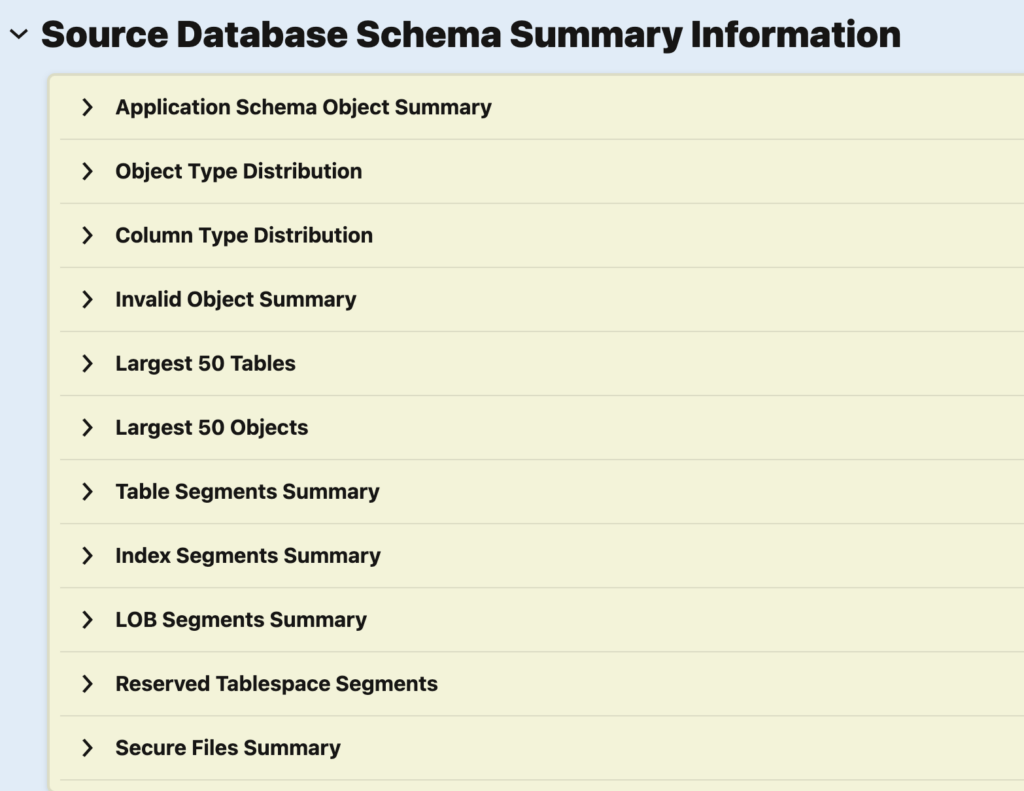
The Source Database Schema Summary Information section focuses on the database objects and storage usage. It provides summaries of application schemas, object type distribution, column data types, and invalid objects. It also highlights the largest tables and objects in the database, which is very helpful when estimating migration effort and identifying large segments that may require special attention.
In addition, the report includes summaries of table segments, index segments, LOB segments, SecureFiles usage, and reserved tablespace segments, giving you a better understanding of how storage is being used in the database.
If you notice any useful information missing from the report that you believe should be included, please let me know and we can work on adding it.
Links to the Complete Blog Post Series about CPAT:
- FAQ
- Part 1 – Starting with CPAT
- Part 2 – Options for Running CPAT
- Part 3 – Running CPAT
- Part 4 – Troubleshooting CPAT
- Part 5 – CPAT Checks
- Part 6 – CPAT New Features – December 2024
- Part 7 – Cloud Premigration Advisor Tool (CPAT) Composer
- Part 8 – CPAT New Features – June 2025
- Part 9 – CPAT – How to Use a Parameter File
- Part 10 – CPAT New Features – September 2025
- Part 11 – CPAT New Features – December 2025
- Part 12 – CPAT New Features – January 2026
- Part 13 – Using CPAT for Non-Autonomous Migrations